Stormwater and drainage around Sydney homes: how it should work
Water is behind most of the structural problems engineers are called to look at in houses. Getting it off the roof, away from the walls and into the right pipe is unglamorous work that protects everything else.
Footing & Frame editors · Published 24 Nov 2026 · Last reviewed 24 Nov 2026
At a glance
- Roof and surface water belongs in the stormwater system, kept away from the footings.
- Stormwater and sewer are separate systems. Each has its own pipes and its own rules.
- Building over or next to a Sydney Water pipe needs Sydney Water's approval of the plans.
- In NSW, any plumbing or drainage work needs a licence, whatever the cost of the job.
Where the water should go
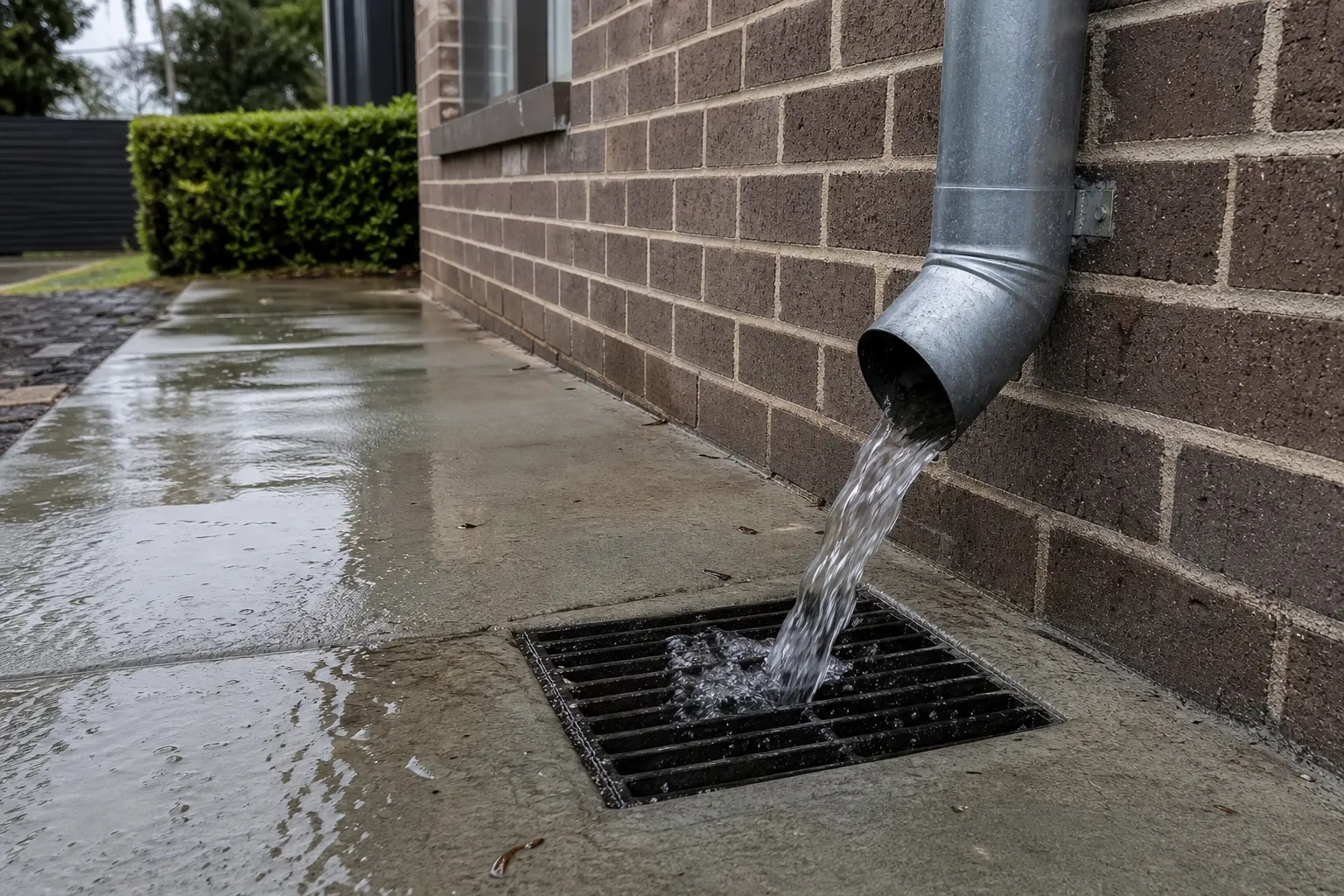
Rain that lands on the roof runs to the gutters, down the downpipes and into the property's stormwater pipes. From there it is taken to the street gutter, a council pipe or an easement, depending on the slope of the block. Many newer homes also have a rainwater tank or an on-site detention system that slows the flow, as required by the council.
Surface water follows the ground. Paving and garden levels should fall away from the house so that water does not pond against the walls.
Why it matters to the structure
The CSIRO homeowner's guide to foundation maintenance identifies erosion and saturation of the soil near footings as causes of building movement. A downpipe that empties beside a wall, or a cracked pipe leaking underground, keeps one part of the foundation wetter than the rest. On reactive clay, that uneven moisture is what produces cracks in walls.
Warning signs include water pooling near the house after rain, damp or musty subfloor spaces, eroded soil at the base of walls and downpipes that overflow at the joint with the ground pipe.
Sydney Water pipes on your property
Sewer and stormwater mains often run through private land, with or without an easement. Sydney Water requires that building work does not damage its pipes or block access to them, and plans for work over or next to its assets need its approval. That is requested through the Tap in service, where you can also buy the sewer service diagram that shows where the pipes on your property run.
Sydney Water publishes separate guidelines for building over or next to its stormwater assets, noting that structures in the wrong place can make flooding worse. Check before you design an extension, a pool or a retaining wall.
Who can do the work
The NSW Government is explicit: you need a licence or certificate to do any plumbing, draining or gasfitting work, regardless of the cost of the work. That covers repairing a stormwater line, relaying a sewer branch and connecting new drainage.
Check any tradesperson on the Service NSW licence register before they start. For repairs, blockages and CCTV inspection of pipes, readers in the metropolitan area can contact a licensed Sydney plumber. Where the problem has already affected the building, bring in a structural engineer as well, so the cause and the damage are dealt with together.
Questions people ask
Can I connect a downpipe to the sewer?
No. Stormwater and wastewater are separate systems. Ask a licensed plumber or drainer how your downpipes should be connected.
How do I find out where the pipes are?
A sewer service diagram from Sydney Water's Tap in shows the private sewer lines on the property. A plumber can locate and inspect pipes with a camera.
Who is responsible for a blocked stormwater pipe?
Pipes inside your boundary that serve your property are generally yours to maintain. Pipes in the street and trunk drains belong to the council or Sydney Water.
References
- NSW Government: Plumbing, draining and gasfitting work
- Sydney Water: Tap in (building plan approvals and diagrams)
- Sydney Water: Building and renovating
- Sydney Water: Building over or adjacent to stormwater assets (PDF)
- CSIRO: Foundation Maintenance and Footing Performance, a homeowner's guide (PDF)
- Service NSW: Verify a licence
This article is general information for New South Wales. It is not engineering, legal or building advice for your property. Rules change: check the linked official sources and use qualified, licensed people.