Cracks in walls: which ones matter and what causes them
Nearly every house in Sydney has a crack somewhere. Most are harmless. The skill is telling ordinary movement from the kind that means the ground under the footings is changing.
Footing & Frame editors · Published 24 Nov 2026 · Last reviewed 24 Nov 2026
At a glance
- Width, direction and whether a crack is changing tell you more than its length.
- Much of Sydney is built on reactive clay, which swells when wet and shrinks when dry.
- Leaking pipes, poor drainage and trees close to the house are the most common avoidable causes.
- Fix the water first. Patching a crack without removing its cause does not last.
How to read a crack
Start with width. The CSIRO homeowner's guide to foundation maintenance reproduces the damage classification used in the Australian footing standard, which runs from hairline cracks through to cracks wide enough to need extensive repair. In that table, cracks under 1 mm are fine cracks that do not need repair, cracks under 5 mm are noticeable but easily filled, and cracks of 5 to 15 mm are moderate damage where part of the wall may need to be replaced.
Then look at shape and behaviour:
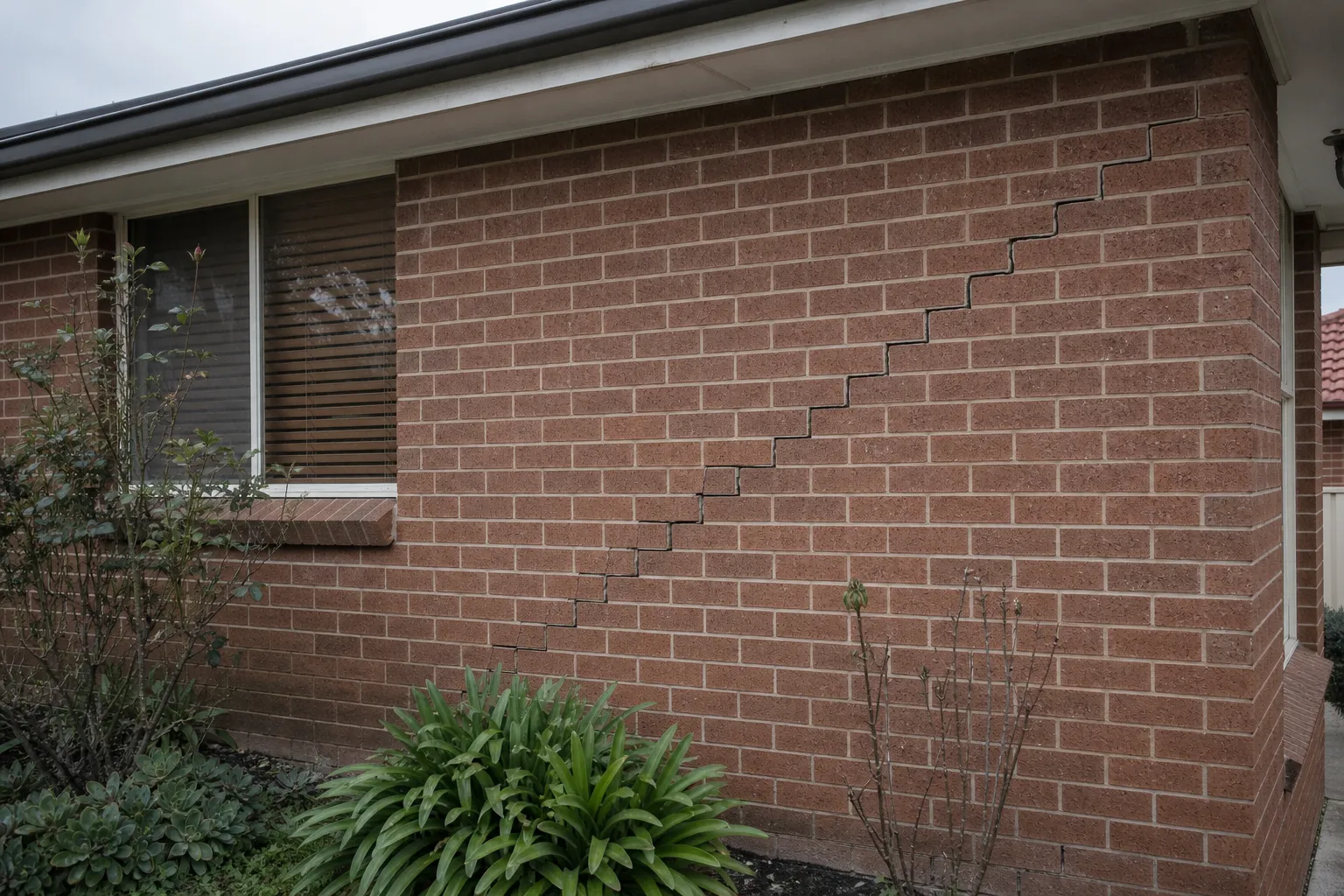
- Stepped cracks following the mortar joints in brickwork point to uneven movement of the footing below.
- Tapered cracks, wider at the top or bottom, show which way that part of the house is moving.
- Doors and windows that start to stick or will not latch are part of the same picture.
- Change matters most. Mark the ends of a crack in pencil with the date and measure the width every few months.
Why the ground moves
The CSIRO guide explains that clay soils swell as they take up water and shrink as they dry, and sites are classified by how reactive they are, from stable sand and rock sites through to extremely reactive clay. A house on reactive clay rises and falls slightly with the seasons.
That movement only cracks a house when it is uneven: one corner wetter or drier than the rest. The guide lists the usual reasons, including erosion and saturation of the soil near footings, tree roots drawing moisture from under one side, and excavation too close to a footing.
Fix the water first
The cheapest structural repair is often a plumbing or drainage repair. Check for:
- downpipes that discharge onto the ground beside the house instead of into the stormwater system;
- leaking taps, hot water overflows and cracked sewer or stormwater pipes near the footings;
- garden beds and paving that slope towards the walls and hold water against them.
Our guide to stormwater and drainage around Sydney homes covers how these systems should work and who is allowed to repair them.
When to call an engineer
Get a structural engineer to inspect if a crack is wide, is clearly growing, runs diagonally through a wall, or comes with sloping floors or a leaning wall. The same applies to any new cracking that appears during excavation or demolition next door, in which case the dilapidation report for your property becomes important.
The CSIRO guide notes that remediation of footings is specialist work. Underpinning and similar repairs should follow an engineer's investigation, not come before it.
Questions people ask
Are hairline cracks in new plaster a structural problem?
Usually not. Fine cracks at joints and corners are common as materials dry and a building settles.
Should I fill a crack straight away?
Monitor it first. If the cause is still active, a rigid filler will crack again. Once movement has stopped, repair and repaint.
Can a big tree really crack a house?
On reactive clay, yes. Roots draw moisture from the soil, the clay shrinks and the nearest footing settles. The CSIRO guide discusses planting distances.
References
This article is general information for New South Wales. It is not engineering, legal or building advice for your property. Rules change: check the linked official sources and use qualified, licensed people.